
This post may contain affiliate links. Please read our disclosure policy.
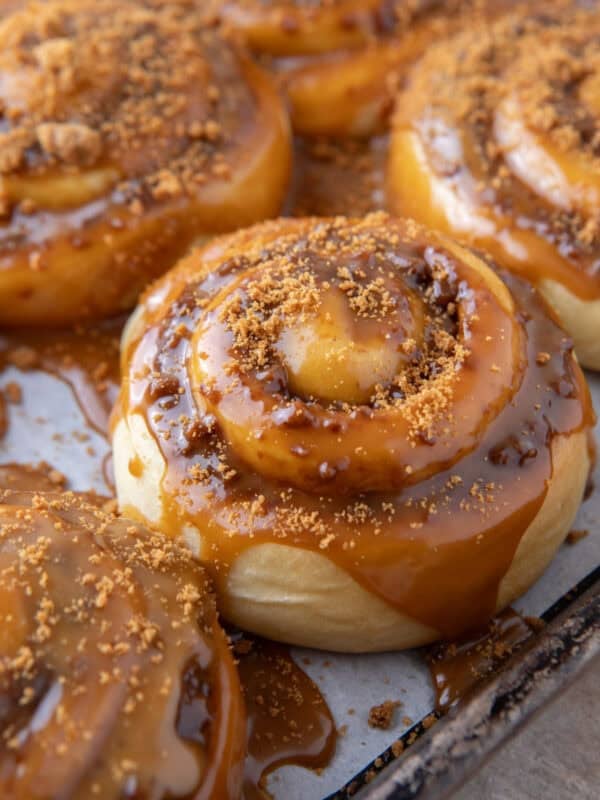
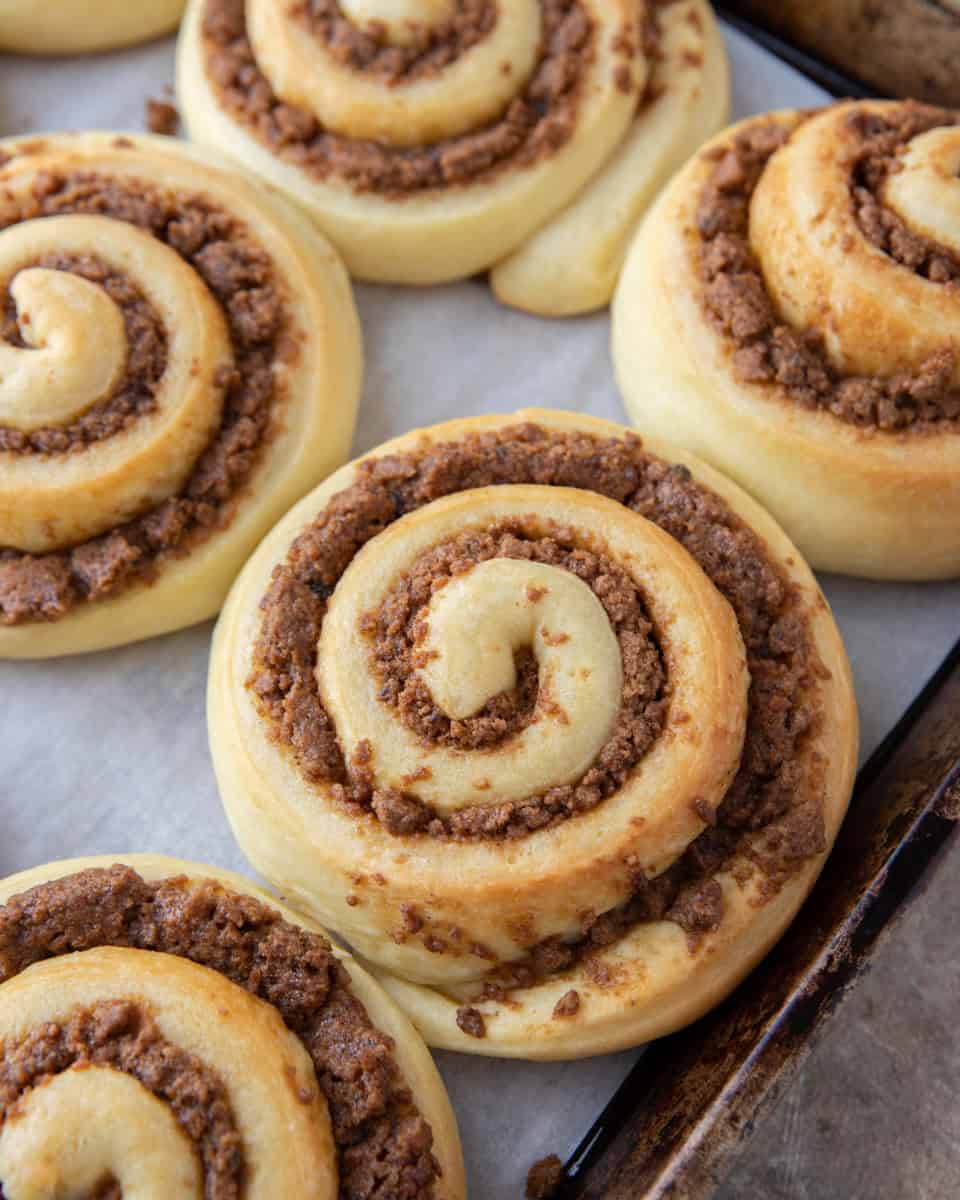
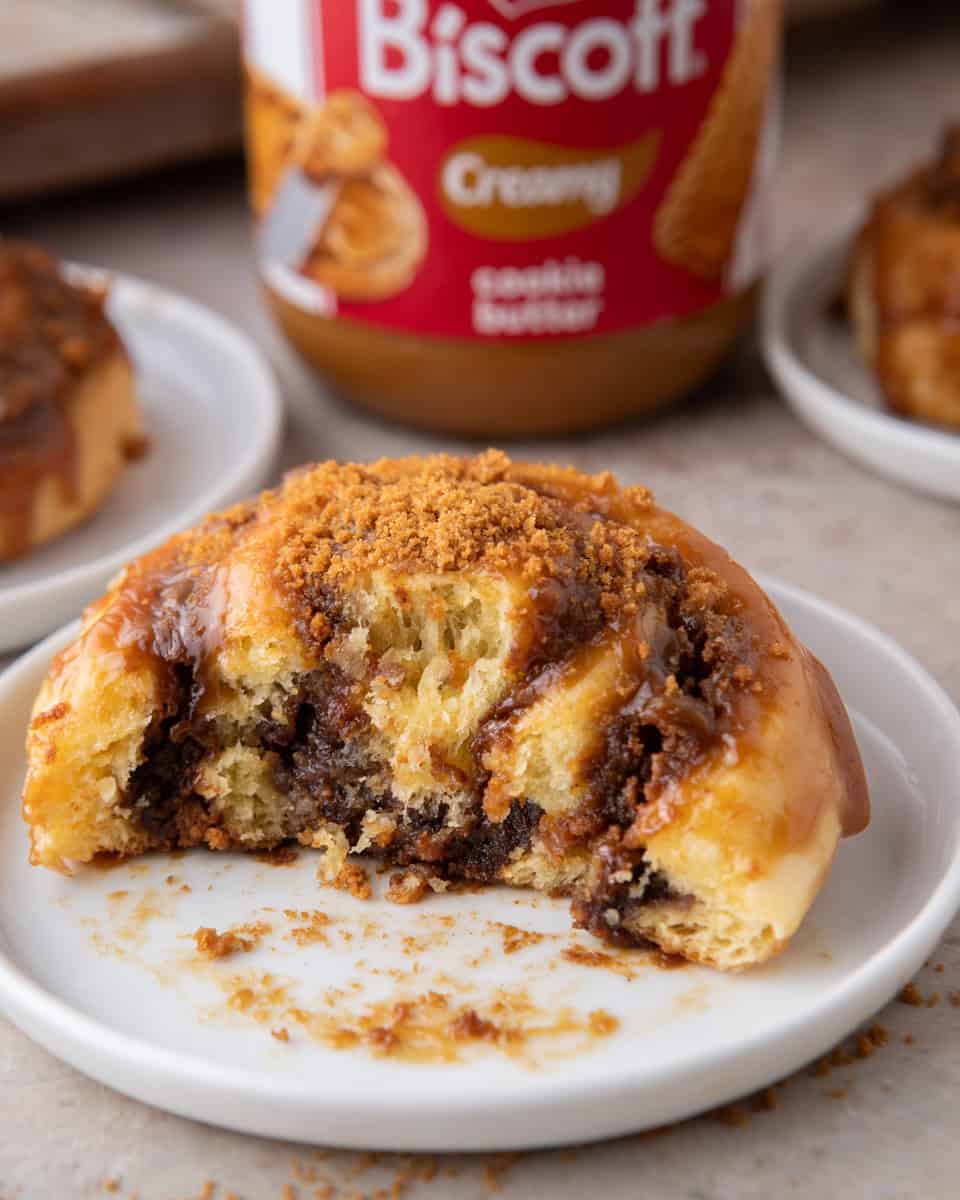
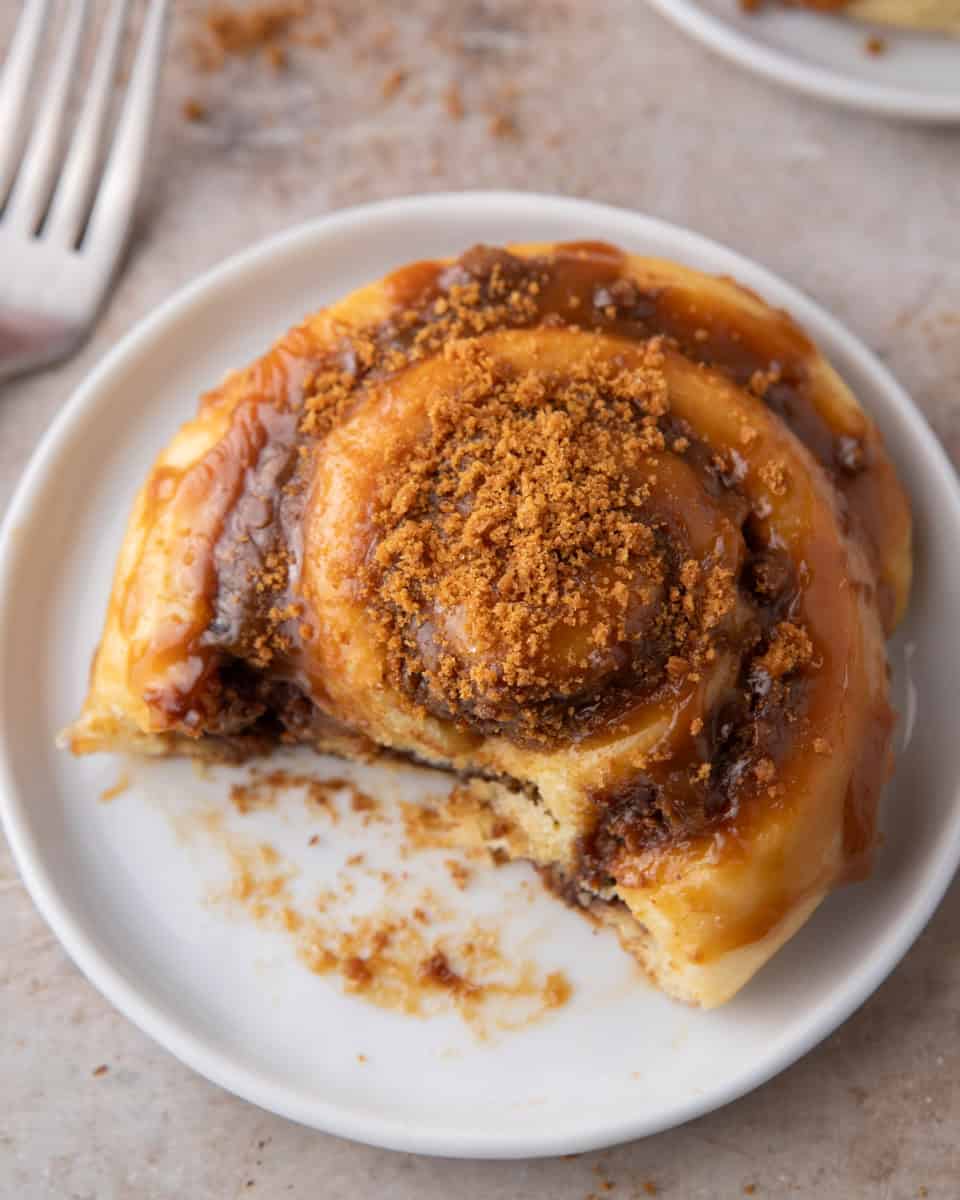
Here is what makes these cookie butter cinnamon rolls different from every other Biscoff cinnamon roll out there: they do not bake squished together in a pan. They bake spaced apart on a sheet pan, so every single roll gets those bakery style gorgeous caramelized edges (not just the corner pieces, I am looking at you, 9×13) and the molten cookie butter glaze has room to pour down all the sides.
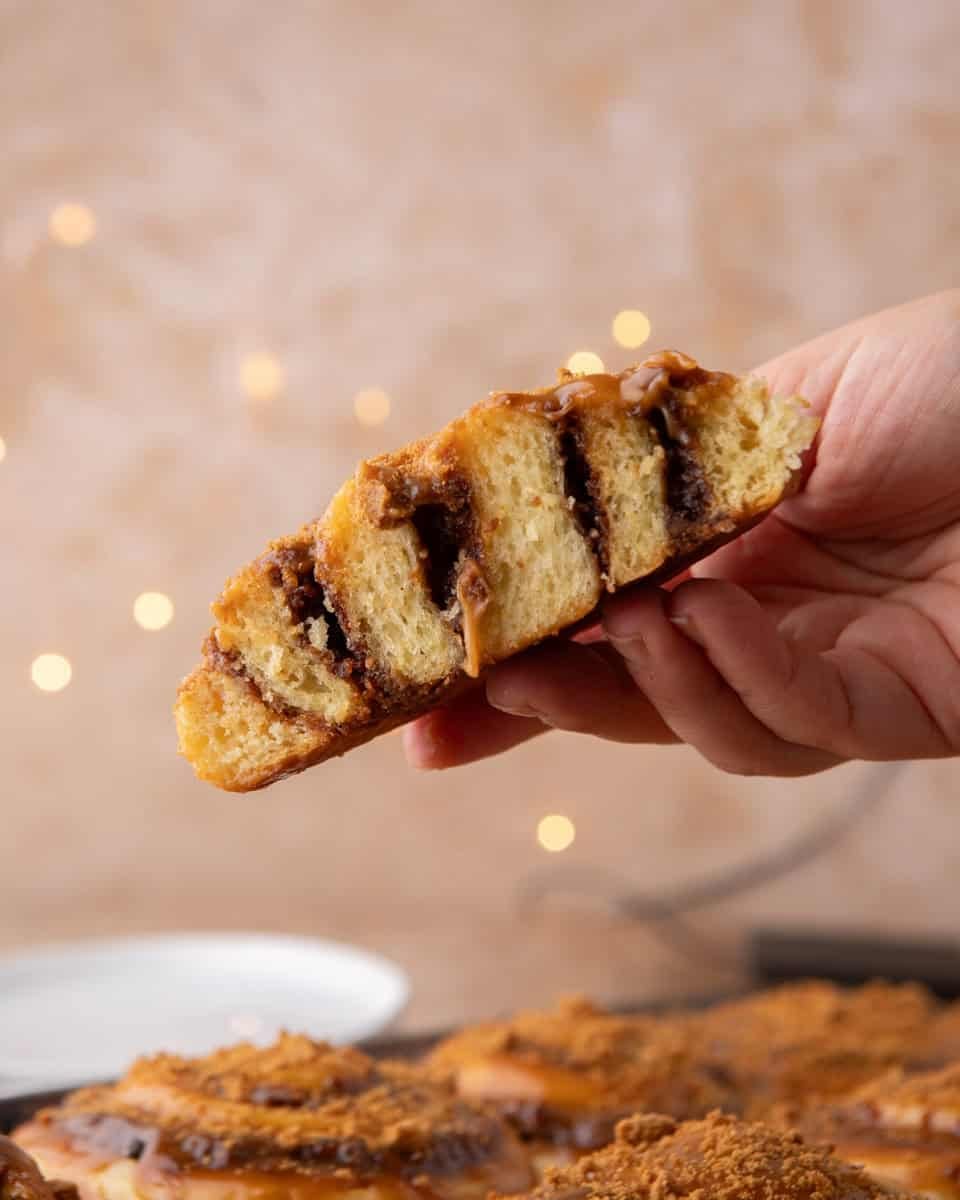
And the dough? It is my signature tangzhong brioche, the same one from my brioche cinnamon rolls, so these stay soft and pillowy for days. No stale rolls here! We have got a spiced cookie butter and crushed Biscoff filling swirled inside, gooey centers, and that molten glaze on top. If you love Biscoff the way I love Biscoff, these are dangerous in the best way. (For every dough type and flavor I have ever made, my full cinnamon roll guide has you covered.)
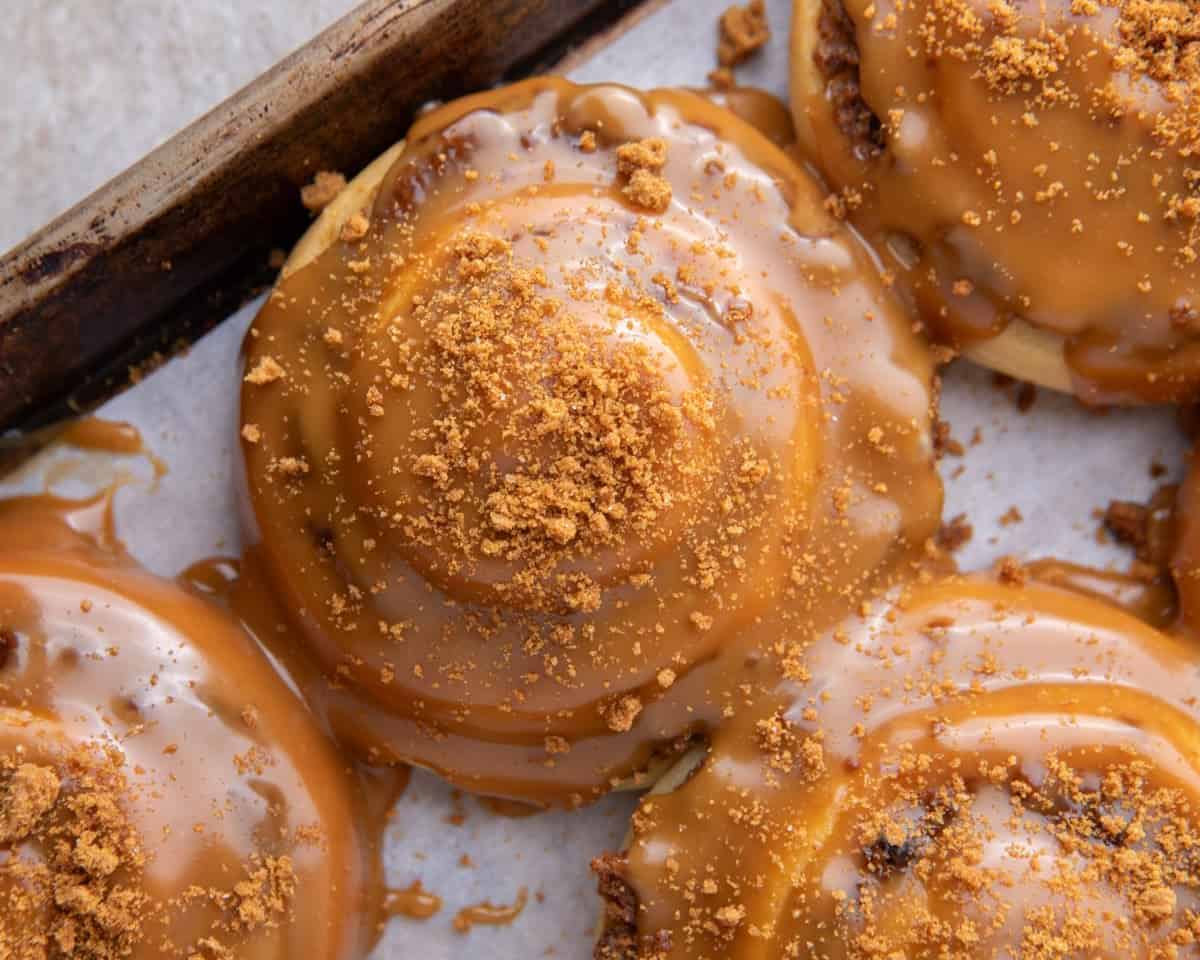
Okay, real talk about how the first batch went, because it is the whole reason I love this version. My early test used a regular dough and a too-thick filling, and the centers came out a little gummy while the filling pooled at the bottom (heartbreaking). So I did what I always do and tested it until it behaved. Switching to my tangzhong brioche and keeping the filling layer nice and thin fixed the texture completely, gooey in the best way, never wet.
The sheet pan is the other thing I fell hard for. Spacing the rolls out gives every single one those caramelized edges I cannot stop thinking about. That said, if you are team soft-and-pillowy-all-around, a 9×13 is absolutely your friend (I put the full how-to below). There is no wrong answer here, just your favorite kind of edge.
Table of Contents
- Why you will love these cookie butter cinnamon rolls
- Ingredient notes
- How to make cookie butter cinnamon rolls
- Tips for bakery-style results
- Want softer rolls? Bake them in a 9×13
- Make These cookie butter cinnamon rolls ahead (overnight rolls)
- How to store and reheat
- Troubleshooting
- Variations
- Frequently Asked Questions About these Biscoff Cinnamon Rolls
- Cookie Butter Cinnamon Rolls (Sheet Pan Style) Recipe
Why you will love these cookie butter cinnamon rolls
- Soft for days: my signature tangzhong (a quick cooked flour and milk paste) lets the dough hold way more moisture, so these stay pillowy for 3 to 4 days instead of going stale by the afternoon. No sad next-day rolls.
- Triple the cookie butter: it is in the filling, in the crushed Biscoff swirled through, and it basically is the glaze. Every bite tastes like a Biscoff cookie melted into a cinnamon roll, and yes, that is the goal.
- Caramelized edges on every roll: spacing them out on a sheet pan means everyone gets a crisp golden edge, not just whoever calls dibs on the corner piece.
- Make-ahead friendly: shape them tonight, bake them fresh tomorrow. Full overnight instructions are below, because mornings are hard enough.
Ingredient notes
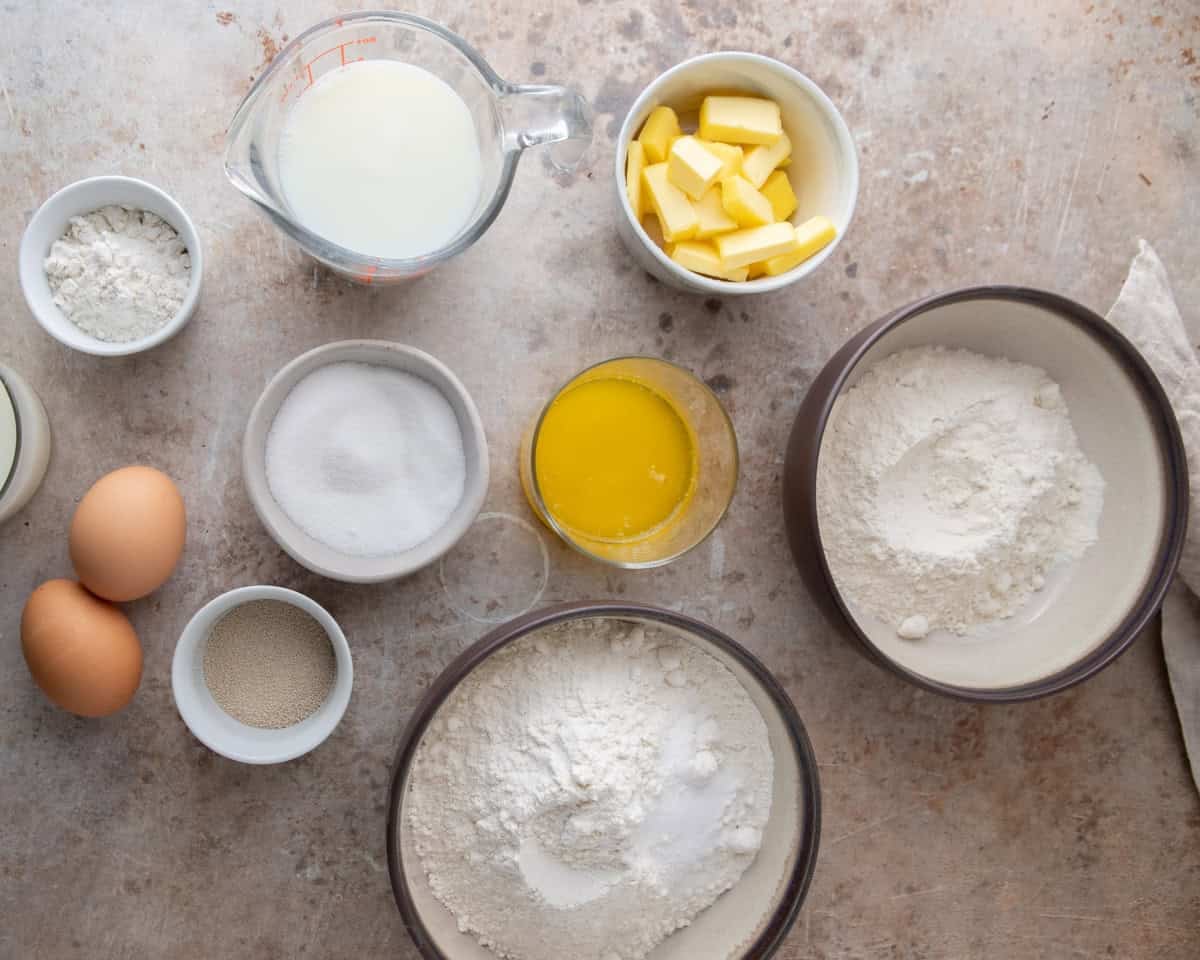
Full measurements are in the recipe card at the bottom of this post. Here is why a few of the ingredients matter.
- Tangzhong (flour and milk): cooking a little flour and milk into a paste pre-gelatinizes the starch so the dough can absorb more liquid. This is the single biggest reason these rolls are so soft and stay soft.
- Bread flour and all-purpose flour: the bread flour gives structure and a gentle chew so the rolls bake up tall and hold the filling, while the all-purpose keeps the crumb tender. Using both is the sweet spot.
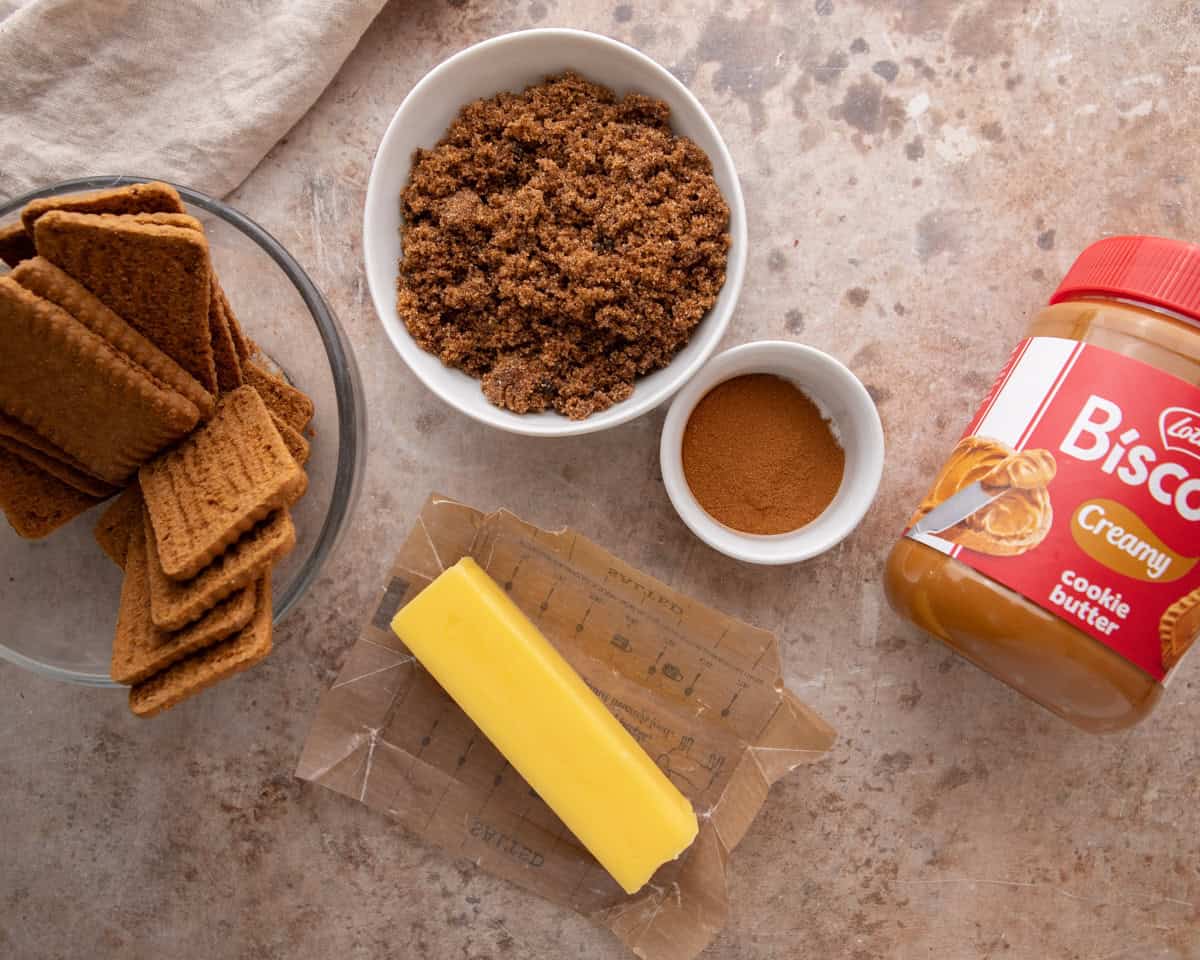
- Cookie butter: this is the star. Lotus Biscoff spread is the classic choice, and the Trader Joe Speculoos cookie butter works just as well. You will find it near the peanut butter and Nutella.
- Crushed Biscoff cookies: folded into the filling, they add little pockets of crunch and push the spiced cookie flavor even further.
- Dark brown sugar: the extra molasses gives the filling a deeper, almost caramel note that plays well with the cookie butter.
- Heavy cream: warmed cream is what loosens the cookie butter into a pourable, glossy glaze without it seizing up. Do not skip warming it.
How to make cookie butter cinnamon rolls
Here is the flow from start to finish. Step-by-step measurements and timing live in the recipe card.
- Make the tangzhong. Whisk the flour and milk in a small saucepan and cook, whisking, until it thickens into a paste. Let it cool to room temperature.
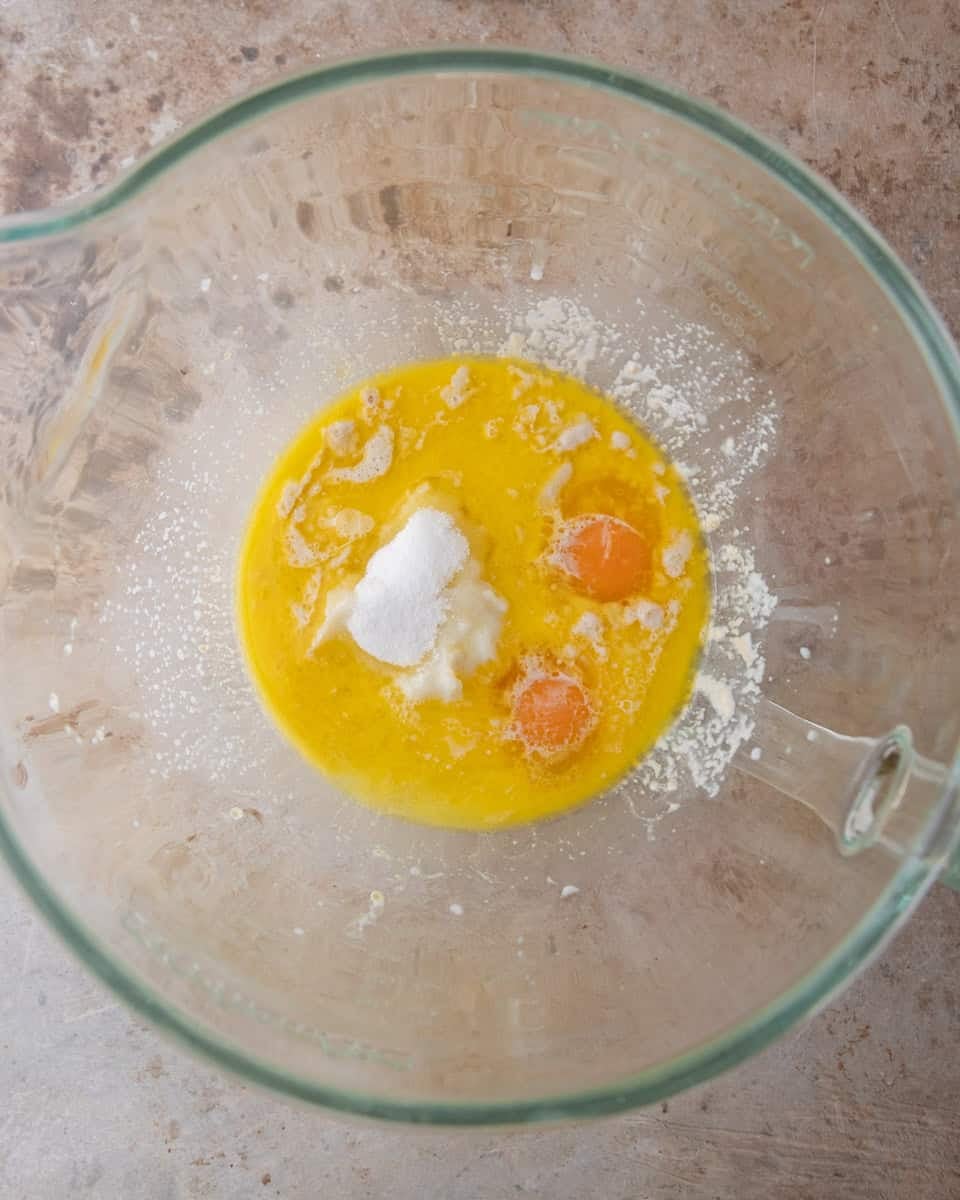
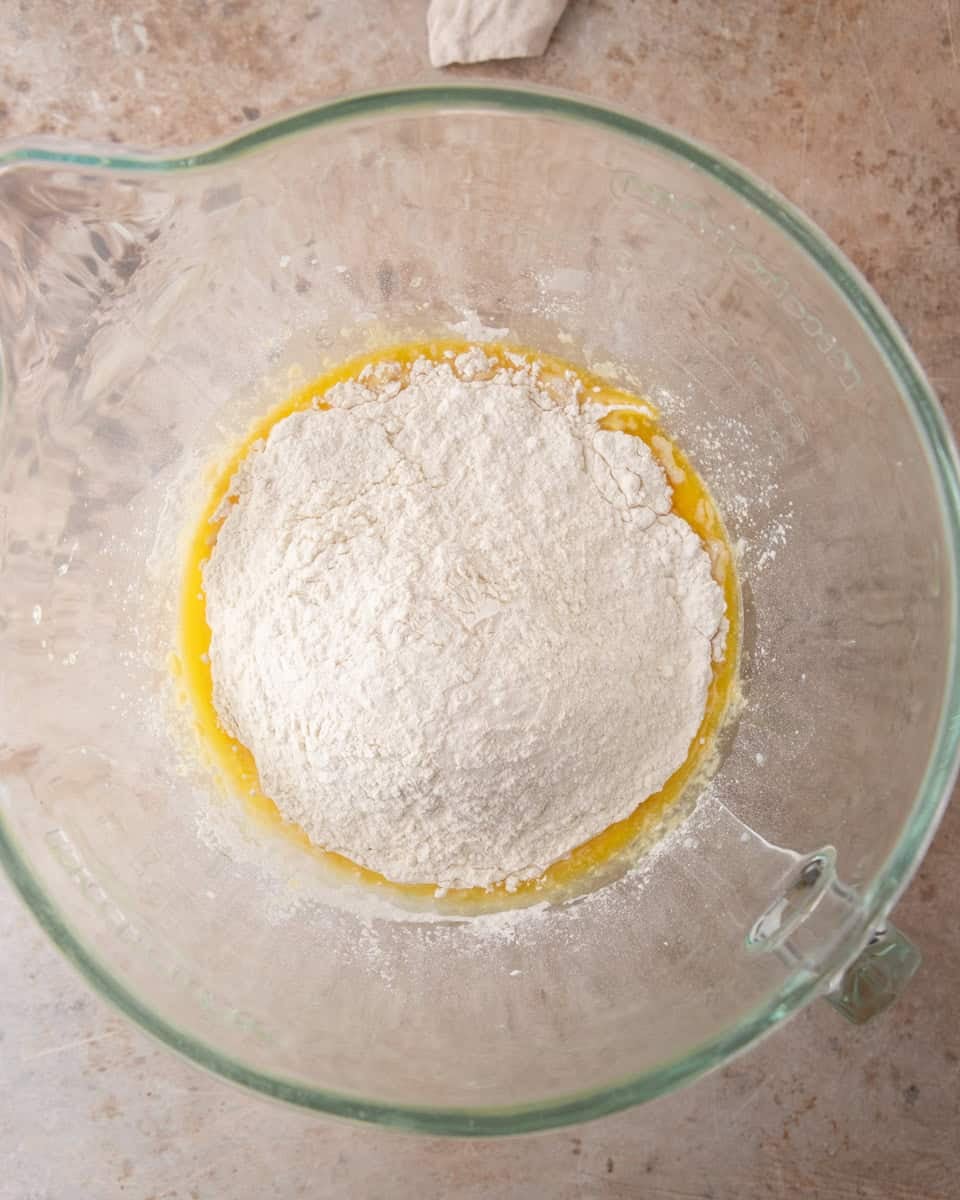
- Make the dough. Bloom the yeast in warm milk and sugar, then mix it with the cooled tangzhong, eggs, vanilla, melted butter, salt and both flours. Knead until smooth, then work in the softened butter a tablespoon at a time.
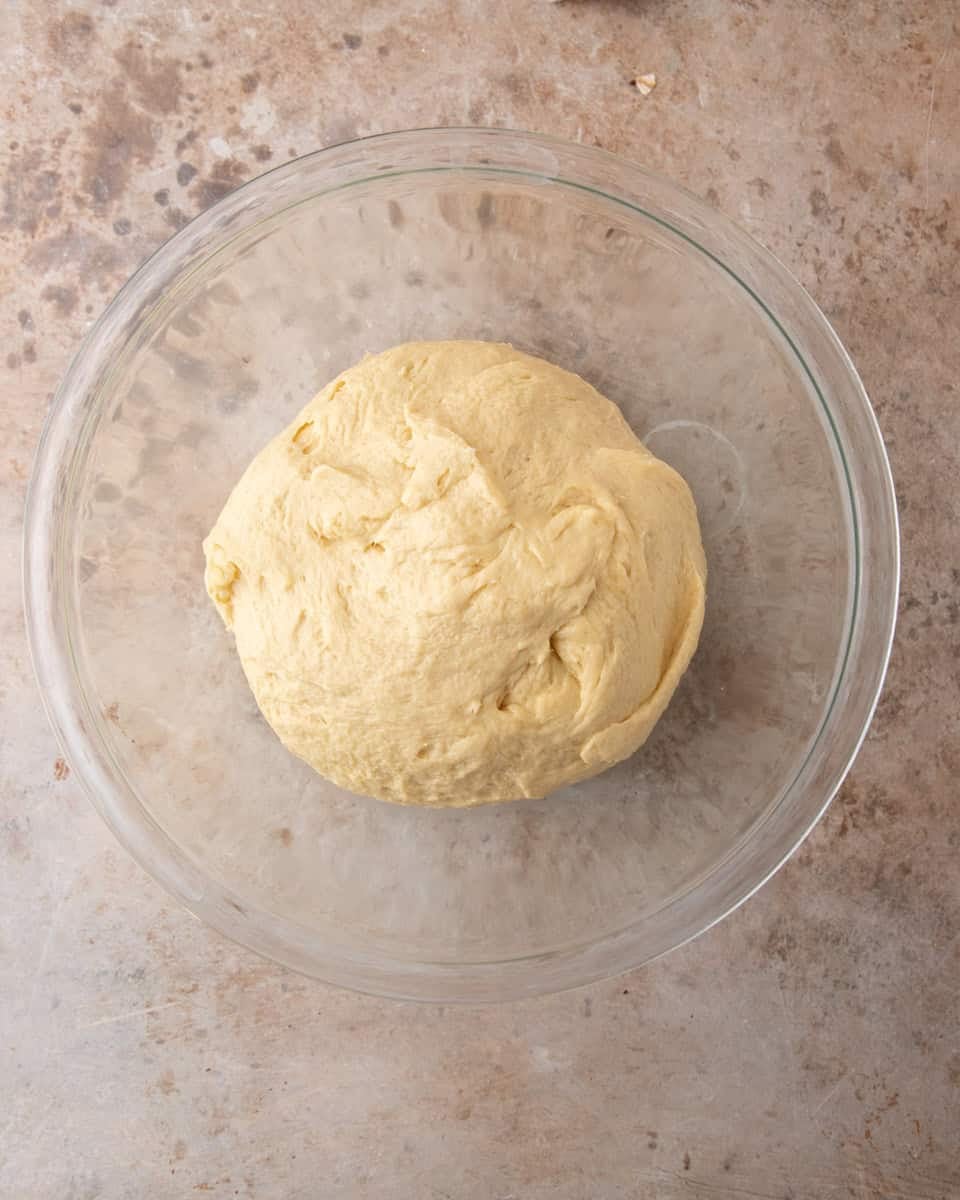
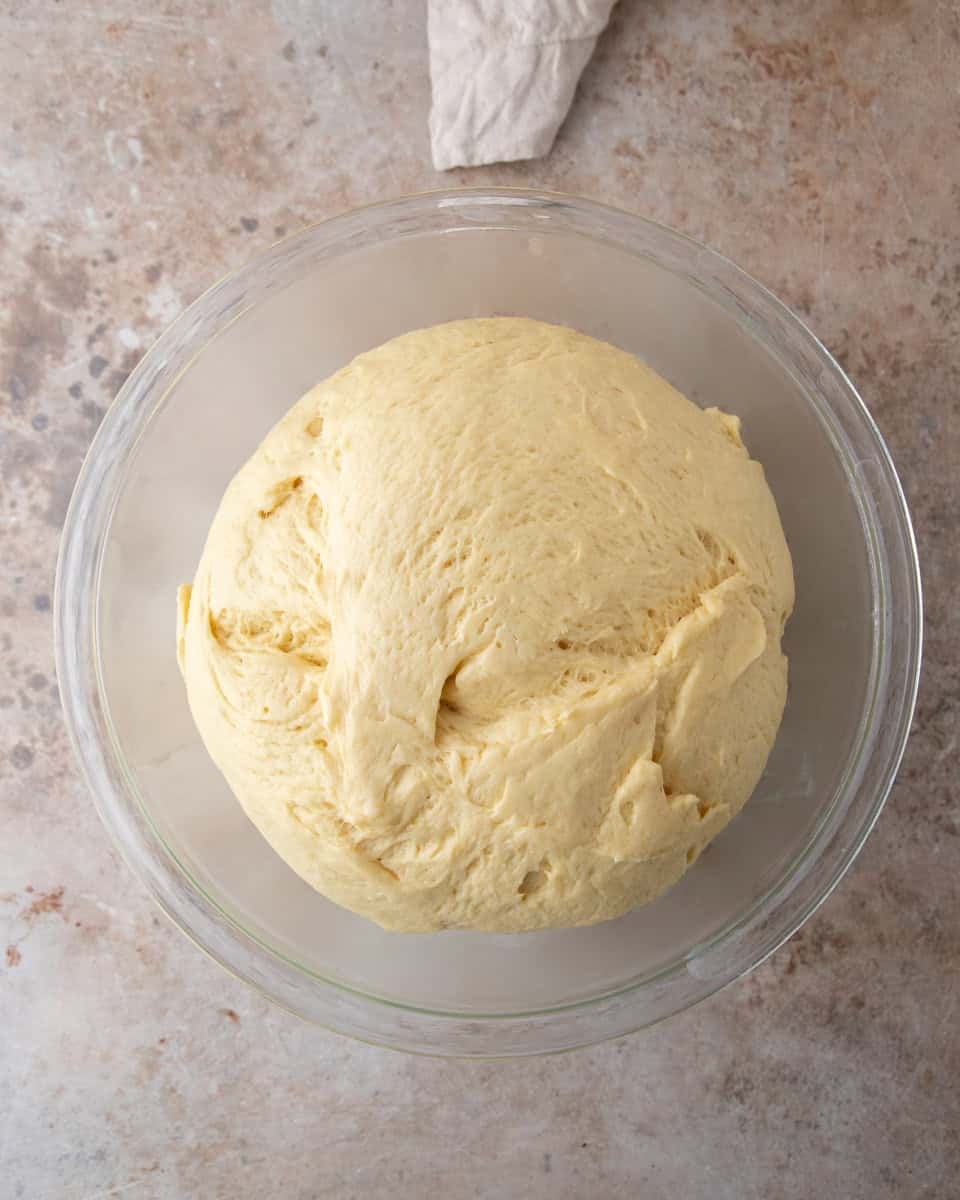
- First rise. Let the dough rise until doubled, then chill it for a few hours or overnight. Cold dough is much easier to roll and gives cleaner swirls.
- Make the filling. Mix the softened butter, cookie butter, brown sugar, cinnamon, salt and crushed Biscoff into a spreadable paste.
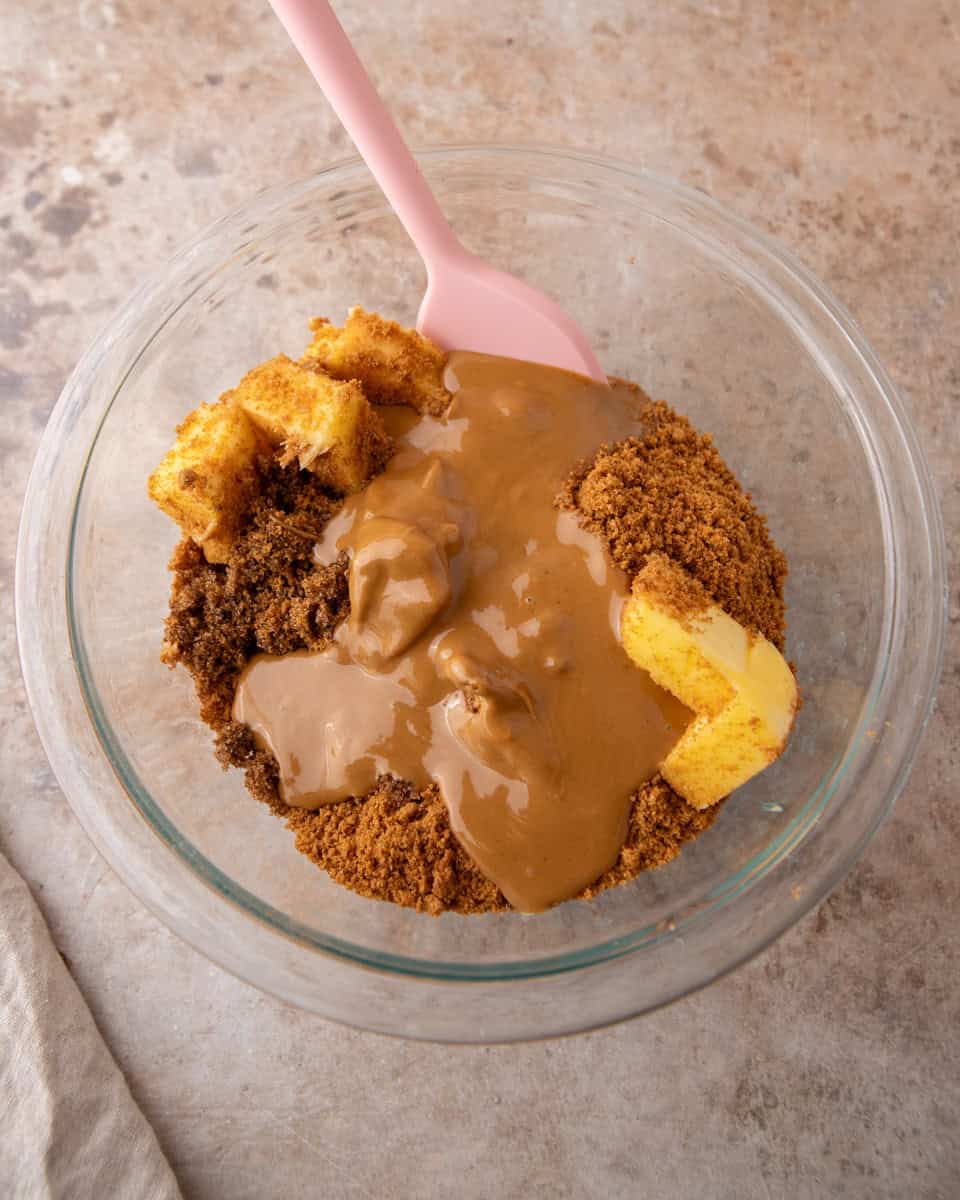
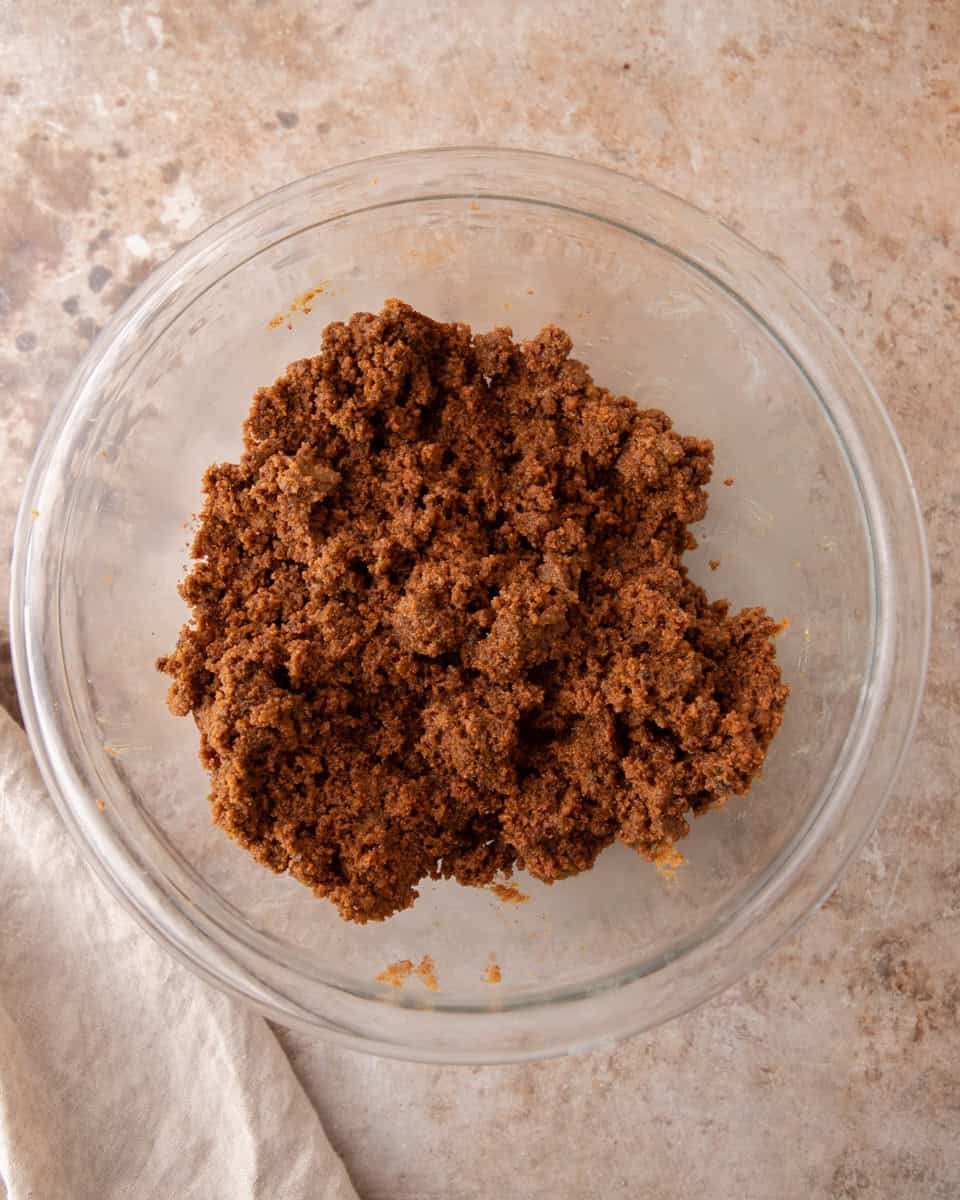
- Shape. Roll the chilled dough into a 16 by 12 inch rectangle, spread the filling in a thin even layer, and leave a half-inch border along the far edge. Cut into 12 strips and roll each one into a spiral.
- Second rise. Space the rolls at least 2 to 2.5 inches apart on a parchment-lined sheet pan and let them rise until very puffy and marshmallowy.
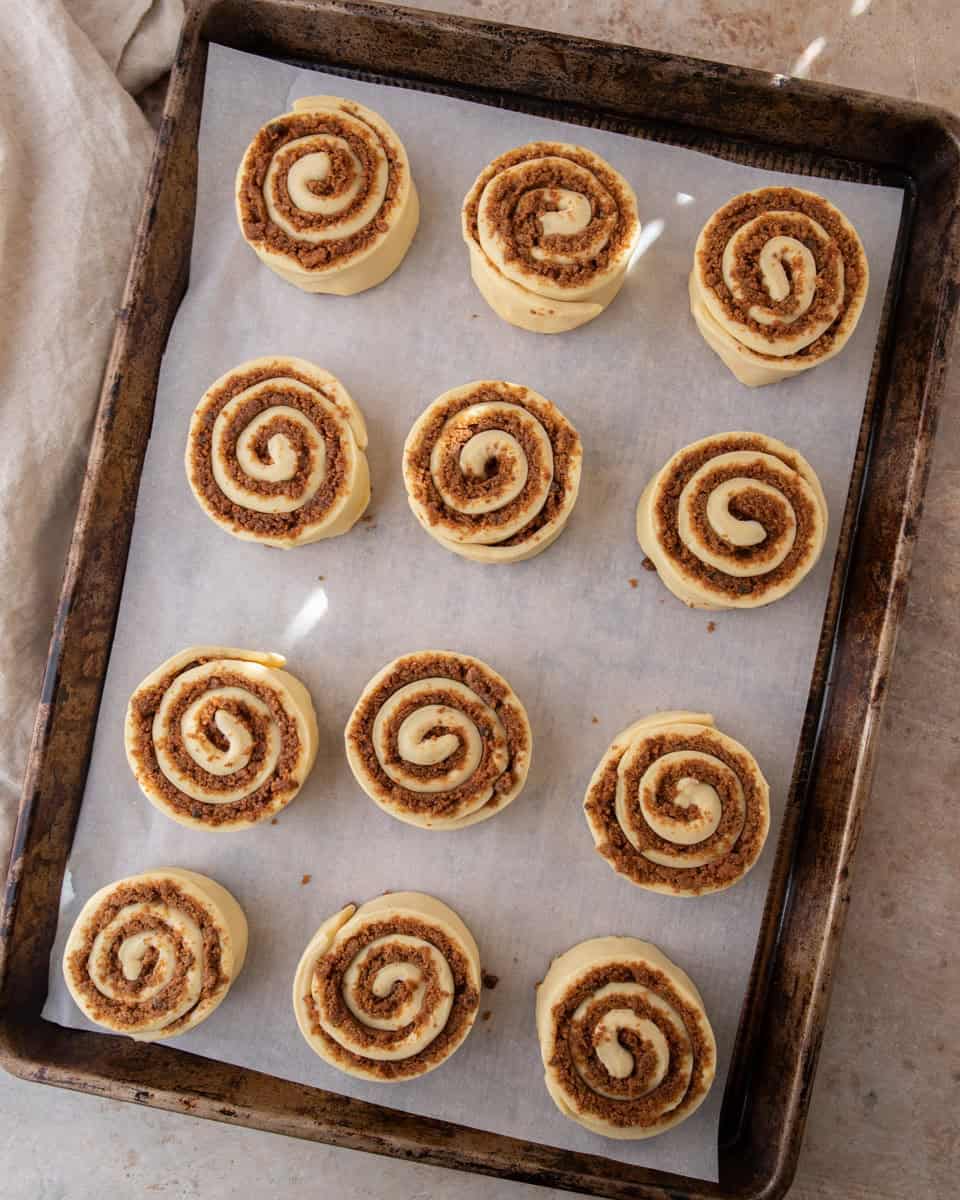
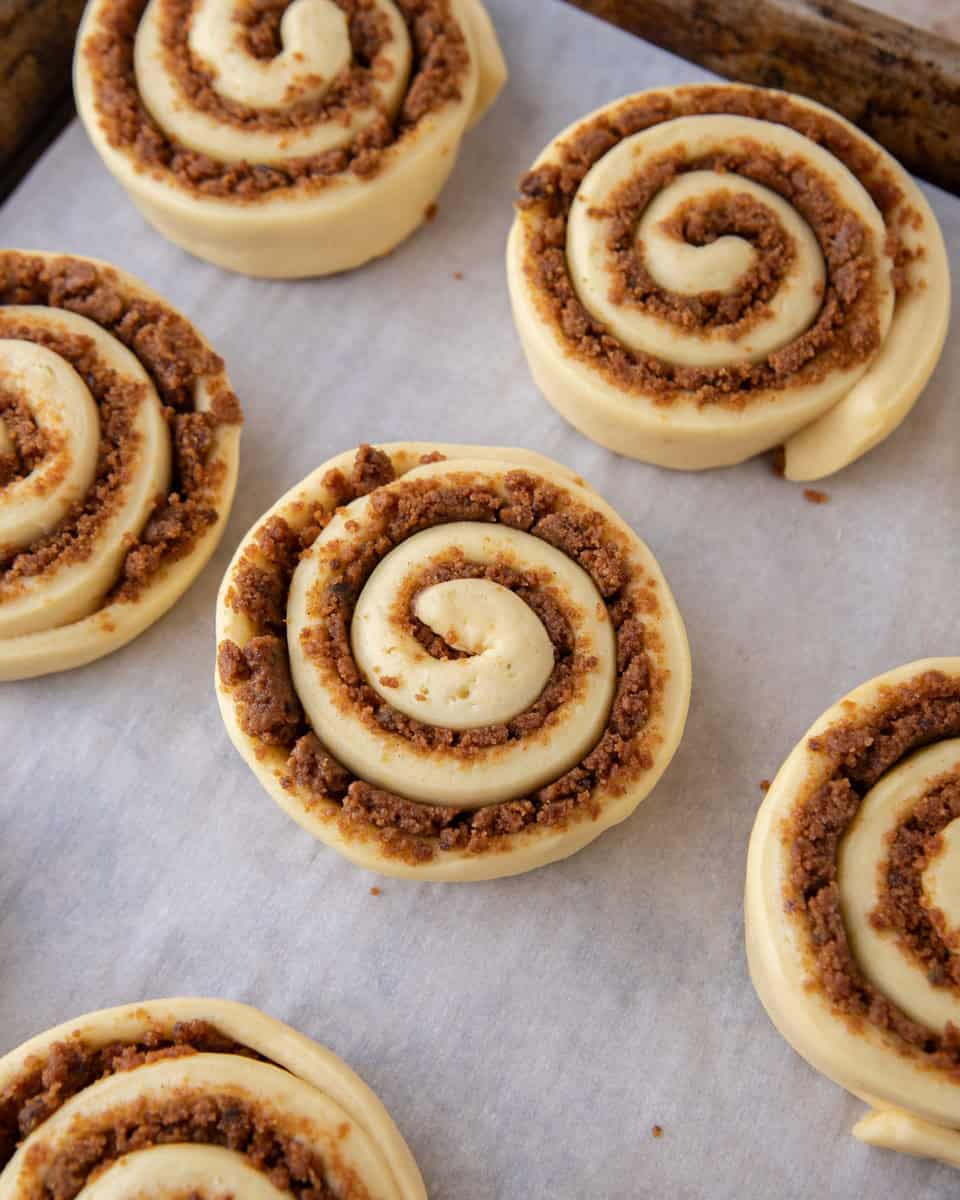
- Bake. Bake at 325F until set with lightly golden edges and the centers reach 190 to 195F. Tent with foil if they brown too fast.
- Glaze. Warm the cookie butter until pourable, whisk in the warm cream, vanilla and salt, then spoon it over the warm rolls and let it drip down the sides.
Tips for bakery-style results
- Chill the dough before shaping: even an hour in the fridge firms up the butter and makes the dough roll out cleanly without tearing.
- Keep the filling layer thin: a thick layer is the number one reason filling leaks out and pools on the pan. Spread it thin and even.
- Use a thermometer: color can fool you with these rolls. The real doneness cue is 190 to 195F in the center.
- Respect the spacing: 2 to 2.5 inches apart is what gives you caramelized edges and room for the glaze. Crowd them and you lose both.
- Warm the cream, do not cook the cookie butter: gentle heat keeps the glaze glossy. Overheated cookie butter can turn grainy.
Want softer rolls? Bake them in a 9×13
Not everyone is here for the crispy caramelized edges, and I completely get it. If you like your cinnamon rolls soft and gooey on all sides, true pull-apart style, bake them in a 9×13 instead. Same dough, same filling, same molten glaze. You are just trading those caramelized edges for pillowy, tear-apart sides.
Here is how:
- Arrange the rolls snugly in a greased or parchment-lined 9×13 pan, leaving just a little space between them so they have room to puff.
- Cover loosely and let them rise until puffy, 50 to 70 minutes.
- Bake at 325F for 25 to 30 minutes, until the centers reach 190 to 195F.
- Cool for 10 to 12 minutes, then glaze. You will get soft, fluffy sides and that classic pull-apart tear.
Make These cookie butter cinnamon rolls ahead (overnight rolls)
Want fresh cinnamon rolls in the morning without setting an alarm for the dough? Here is the move:
- Shape the rolls and arrange them on the parchment-lined sheet pan.
- Cover tightly and refrigerate overnight.
- In the morning, let them sit at room temperature for 45 to 60 minutes until puffy, then bake as directed.
- You can also freeze the baked, unglazed rolls and add the glaze after a gentle rewarm.
How to store and reheat
Here is how to keep them tasting just-baked:
- Room temperature: airtight container for 1 day.
- Fridge: up to 3 days in an airtight container.
- To reheat: 10 to 15 seconds in the microwave, or a few minutes in a 300F oven. My little trick is a tiny splash of cream over the roll first so it warms up soft instead of dry.
Troubleshooting
- Rolls turned out dense: they were most likely under-proofed or had a little too much flour worked in. Let the second rise go until the rolls look puffy and marshmallowy before baking.
- Filling leaked out: the layer was too thick or the far border was skipped. Keep the filling thin and leave that half-inch edge so the spiral can seal.
- Edges browned too fast: tent loosely with foil and trust the 325F. The lower temperature is intentional so the centers reach temperature before the edges over-brown.
- Glaze too thick or too thin: too thick, warm it and whisk in another splash of cream. Too thin, let it cool for a few minutes to set up before spooning it over.
Variations
- Cookie butter cream cheese frosting: if you want a frosting instead of the molten glaze, beat 4 ounces softened cream cheese with 3 tablespoons butter, half a cup cookie butter and about a cup of powdered sugar until smooth. Spread it on the slightly cooled rolls.
- Pull-apart style: bake them snug in a 9×13 instead for softer, fluffier sides and a classic pull-apart pan.
- Extra Biscoff: finish with a second drizzle of warmed cookie butter and a heavy shower of crushed Biscoff cookies.
- Coffee glaze: whisk a teaspoon of espresso powder into the glaze for a mocha edge that suits the spiced cookie flavor.
Frequently Asked Questions About these Biscoff Cinnamon Rolls
Cookie butter is a smooth, spreadable spread made from speculoos cookies, the spiced caramelized biscuits behind Lotus Biscoff. It tastes like cinnamon, brown sugar and warm spice, which makes it perfect for cinnamon rolls.
No. This is an enriched dough and it will be very soft and sticky before chilling it. It’s impossible to knead/mix it by hand. Trust me, I tried!
Either works here. With active dry yeast, bloom it in the warm milk first. With instant yeast you can skip the blooming step, though a quick bloom never hurts.
Yes, but the tangzhong is what keeps these so soft and fresh for days, so I really recommend the few extra minutes it takes.
The centers should reach 190 to 195F on an instant-read thermometer, with set, lightly golden edges. That is more reliable than color alone with these rolls.
Yes. Freeze them baked but unglazed, then thaw and rewarm gently before adding the molten glaze so it looks freshly poured.

Cookie Butter Cinnamon Rolls (Sheet Pan Style)
Ingredients
Tangzhong
- 2 tablespoons all-purpose flour
- 1/2 cup whole milk
Brioche Dough
- 3/4 cup whole milk warmed to 100–110°F
- 2 1/4 teaspoons active dry yeast or instant yeast
- 1/4 cup granulated sugar
- 1/4 cup unsalted butter melted or very soft
- 1 teaspoon vanilla bean paste or vanilla extract
- 2 large eggs room temperature
- 1 1/4 teaspoons salt
- 2 1/2 cups all-purpose flour
- 1 cup bread flour
- 5 tablespoons unsalted butter softened (added after kneading)
Cookie Butter Filling
- 6 tbsp unsalted butter softened
- 1/2 cup cookie butter Biscoff-style
- 1/2 cup dark brown sugar
- 1 tablespoon ground cinnamon
- 1/2 teaspoon salt
- 3/4 cup finely crushed Biscoff cookies
Molten Cookie Butter Glaze
- 1 cup cookie butter
- 1 cup heavy cream warmed
- 1 teaspoon vanilla extract
- Pinch of salt
Optional Garnish
- Crushed Biscoff cookies
- Flaky sea salt
Instructions
Make the Tangzhong
- In a small saucepan, whisk together the flour and milk until smooth. Cook over medium heat, whisking constantly, until thickened into a paste that leaves visible lines when whisked, about 2–4 minutes. Transfer to a bowl and let cool to room temperature.2 tablespoons all-purpose flour, 1/2 cup whole milk
Make the Dough
- In a small bowl, whisk the warm milk and sugar until dissolved. Sprinkle yeast over the top and let sit for 5 minutes until foamy.3/4 cup whole milk, 2 1/4 teaspoons active dry yeast, 1/4 cup granulated sugar
- In the bowl of a stand mixer fitted with the dough hook, combine the cooled tangzhong, yeast mixture, melted butter, vanilla, eggs, salt, and both flours. Mix on low speed until a soft dough forms.1/4 cup unsalted butter, 1 teaspoon vanilla bean paste or vanilla extract, 2 large eggs, 1 1/4 teaspoons salt, 2 1/2 cups all-purpose flour, 1 cup bread flour
- Knead on medium speed for 5–8 minutes until smooth and elastic. Add the softened butter one tablespoon at a time, mixing until fully incorporated. The dough will be slightly sticky.5 tablespoons unsalted butter
- Transfer dough to a greased bowl, cover, and let rise in a warm place for 1–2 hours until doubled.
- Refrigerate the dough for 2–8 hours or overnight after the first rise. This will not only make the rolling process easier but deepen the flavor of our cinnamon roll dough.
Make the Filling
- In a medium bowl, mix the softened butter, cookie butter, brown sugar, cinnamon, salt, and crushed cookies until smooth and spreadable.6 tbsp unsalted butter, 1/2 cup cookie butter, 1/2 cup dark brown sugar, 1 tablespoon ground cinnamon, 1/2 teaspoon salt, 3/4 cup finely crushed Biscoff cookies
Shape the Rolls
- Line a large rimmed baking sheet with parchment paper.
- Roll the chilled dough into a 16×12-inch rectangle with the long side facing you. Spread the cookie butter filling in a thin, even layer, leaving a 1/2-inch border along the far long edge.
- Using a pizza cutter or sharp knife, cut the dough into 12 strips. Roll each strip up individually into a spiral.
- Arrange the rolls on the prepared baking sheet, spacing them at least 2–2½ inches apart.
- Cover loosely and let rise for 50–70 minutes, until very puffy and marshmallowy.
Bake
- Preheat the oven to 325°F .
- Bake the rolls for 22–26 minutes, until set with lightly golden edges and centers reaching about 190–195°F. Tent loosely with foil if they brown too quickly.
- Let rolls cool for 10–12 minutes before glazing.
Make the Molten Cookie Butter Glaze
- Gently warm the cookie butter until pourable but not hot. Whisk in the warm cream, vanilla, and salt until smooth and glossy.1 cup cookie butter, 1 cup heavy cream, 1 teaspoon vanilla extract, Pinch of salt
- Spoon the glaze over the warm rolls, letting it drip down the sides.
- Finish with crushed cookies or flaky salt if desired.Crushed Biscoff cookies, Flaky sea salt
Notes
• Keep the filling layer thin to prevent leaking during baking.
• For overnight rolls, shape and place on the baking sheet, cover tightly, and refrigerate overnight. Bring to room temperature for 45–60 minutes before baking.
• Store leftovers in an airtight container at room temperature for 1 day or refrigerate for up to 3 days. Rewarm gently before serving.
Nutrition
Nutrition information is automatically calculated, so should only be used as an approximation.


was easy to work with and taste delicious
So glad to hear that!!